
Metallurgical process modelling and simulation consulting services
Mineral processing capital decisions are risky: oversizing wastes money, undersizing creates bottlenecks, and optimistic assumptions lead to costly gaps between expected and real performance. With lower‑grade and more complex ores, fixing these errors after investment is committed becomes even more expensive.
Process simulation removes this risk by predicting circuit performance across ore types, equipment choices, grind sizes, and operating strategies before capital is committed. Built on calibrated models and reconciled mass balances, it shows what to build, what to avoid, and the true limits of your circuit.
CASPEO delivers independent metallurgical process modelling and simulation consulting services grounded in rigorous mass balance reconciliation, mineral processing expertise, and hydrometallurgical modelling. Whether validating a new flowsheet, forecasting feasibility study performance, or optimising an operating plant, CASPEO provides the technical depth to reduce risk and strengthen every engineering decision across the mine-to-metal value chain.
Why process simulation matters in mineral processing?
Process simulation is a science-based engineering methodology that mirrors the full complexity of your plant, from feed variability and ore characterisation through unit operation interactions to final product quality and tailings behaviour.
Without reliable simulation, operations face:
- Hidden bottlenecks that only appear after commissioning, when correction costs are highest
- Poorly sized equipment that underperforms or over-consumes energy, water, and reagents
- Flawed feasibility assumptions that inflate projected recoveries or underestimate sensitivity to ore variability
- Reactive optimisation that addresses symptoms rather than root causes of performance losses
- Weak ESG reporting foundations, as water, energy, and tailings figures are estimated rather than modelled
CASPEO eliminates these risks through calibrated, data-driven simulation models that reflect how a circuit actually behaves and how it will respond to change.
CASPEO’s mineral processing simulation consulting services
CASPEO delivers expert advisory services across the full simulation lifecycle, from initial model building through scenario analysis to plant optimisation.
Our approach integrates process mineralogy, ore characterisation, and mass balance reconciliation into every simulation engagement ensuring that models are built on a verified understanding of how your ore behaves through the beneficiation circuit, not on generic assumptions.
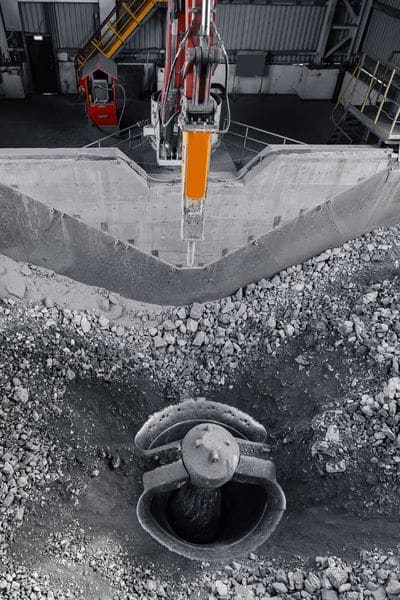
Scenario analysis
Scenario analysis for feed changes or equipment upgrades
Ore characteristics evolve throughout the life of a mine. Variations in mineralogy, particle size distribution, or feed grade can significantly affect plant performance. In addition, decisions made without anticipating these changes carry real financial and operational risk.
CASPEO performs mineral processing scenario analysis using calibrated simulation models to evaluate the impact of such changes before they occur.
We simulate the effects of:
- Ore variability and different feed blends
- Changes in grinding or liberation conditions
- Equipment replacement or upgrades
- Flowsheet reconfiguration
- Integration of recycled or secondary materials
Our analysis quantifies the impact of these variations on recovery, concentrate quality, throughput, water and energy consumption, reagent usage, and tailings characteristics. It provides a full-circuit view that captures interactions between unit operations.
THE RESULT
Reliable predictions of plant behaviour under changing conditions, enabling confident operational and investment decisions before ore transitions or equipment changes reach the live circuit without the cost and disruption of trial and error on a producing plant.
Equipment sizing
Determine unit operation capacities and operating conditions
Correct equipment sizing is essential for achieving both technical performance and economic efficiency. Oversized equipment wastes capital; undersized equipment creates bottlenecks that erode recovery and throughput.
CASPEO uses process simulation and steady-state mass balance modelling to determine appropriate capacities and operating conditions for unit operations across the full beneficiation circuit.
Typical equipment we evaluate includes:
- Crushers, grinding mills, and classification systems
- Hydrocyclones and screening systems
- Flotation cells and flotation circuits
- Leaching reactors and solvent extraction units
- Ion exchange, precipitation, and electrowinning equipment
- Thickeners, clarifiers, and filtration systems
Our studies evaluate materials and water balances, reaction kinetics, and interactions between unit operations. Thanks to our proprietary process modelling and simulation software USIM PAC, we are able to provide a full-circuit view rather than isolated equipment assessments.
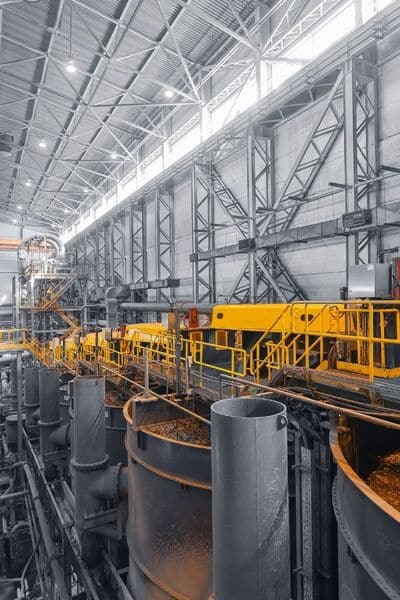
THE RESULT
Equipment correctly sized for the ore characteristics, liberation requirements, and full circuit reducing the risk of hidden bottlenecks, oversized capital expenditure, and costly post-commissioning redesign.
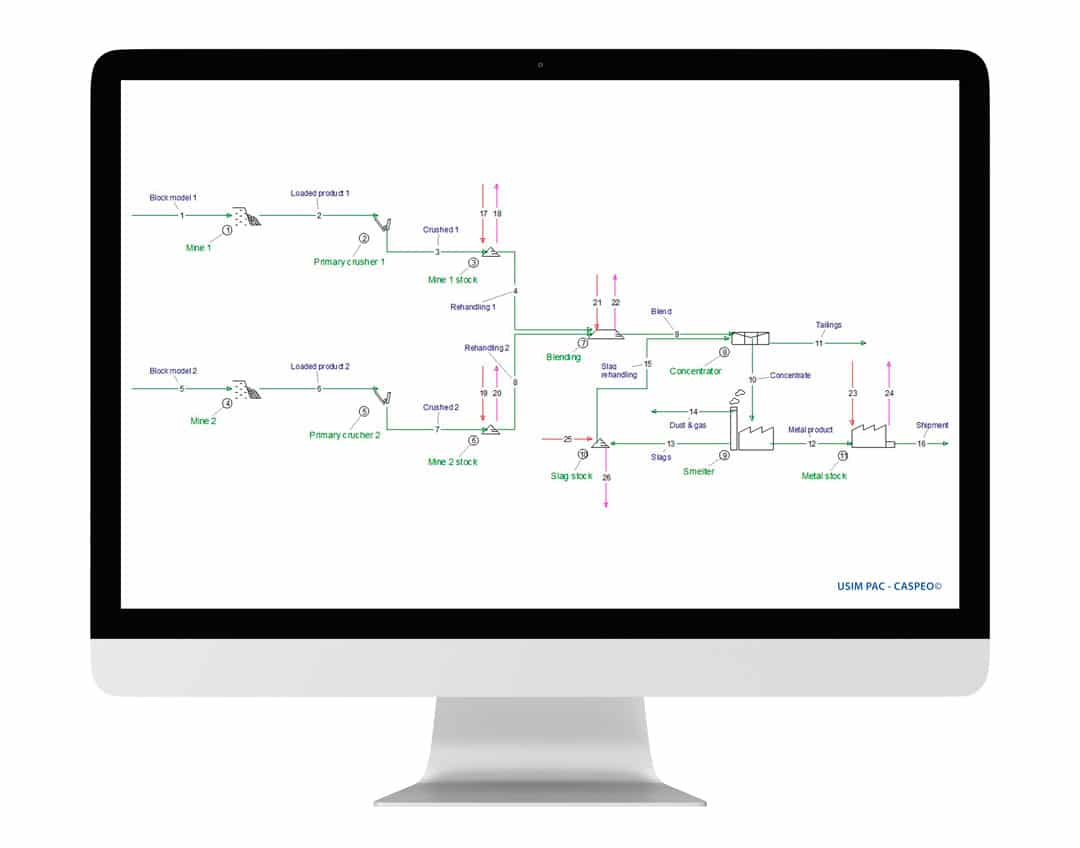
DESIGN VALIDATION
Design validation for new or expanded process circuits
Before committing capital to a new plant or expansion project, flowsheet designs must be validated under realistic operating conditions. Assumptions that look sound at the design stage can fail under real ore variability, particularly for complex, low-grade, or multi-metal orebodies where beneficiation behaviour is sensitive to mineralogical variation and liberation differences between ore domains.
CASPEO performs flowsheet simulation and design validation to verify that proposed circuits can achieve expected metallurgical performance.
Our validation work includes:
- Verification of mass balance consistency across the full beneficiation circuit
- Comparison of alternative process routes on a quantitative basis
- Validation of metallurgical assumptions (ore characterisation, mineralogy, testwork data…)
- Evaluation of circuit behaviour unders different ore types
- Identification of potential bottlenecks arising from scale-up
All validation work is performed using USIM PAC, CASPEO’s proprietary process modelling and simulation software, which allows us to test the full circuit under variable ore conditions before a single dollar of capital is committed.
THE RESULT
Stronger engineering designs and reduced technical risk before investment decisions are made giving project teams and stakeholders confidence that performance targets are achievable across the full range of expected ore conditions, not just at an idealised design point.
Simulation is only as powerful as the data behind it
Process simulation provides strategic clarity but only when built on data you can trust. A simulation model built on biased, unreconciled, or unrepresentative data will reproduce those errors with precision, not plant reality. The result is a model that looks sophisticated but rests on a compromised foundation.
Data quality matters even more as operations move toward advanced analytics, machine learning, and real‑time process control. These tools only work reliably when grounded in high‑quality, well‑structured, and validated process data. A steady‑state simulation model calibrated on reconciled measurements and a sound understanding of ore mineralogy and beneficiation behaviour delivers the validated process insight that advanced digital tools must be built on. Without this foundation, digital-twins tend to amplify data problems rather than solve them.
CASPEO integrates three disciplines into every modelling project: sampling, mass balance reconciliation, and simulation ensuring the foundation is solid before any model is built. We are one of the very few consulting organisations delivering all three from a single integrated team.
FEASIBILITY SUPPORT
Feasibility support and performance forecasting
Feasibility studies are only as reliable as the technical inputs that underpin them. Simulation-based performance forecasting uses calibrated steady-state models that quantify how ore variability, mineralogical complexity, and operating conditions affect mineral processing and hydrometallurgical plants performance across a range of scenarios.
CASPEO supports engineering studies by providing sensitivity analysis to evaluate project risks and performance.
Our modelling work helps estimate:
- Metallurgical recovery and product grade
- Plant throughput and operating envelopes (ore and particle size variability, moisture…)
- Water, energy and mateials balances
- Reagent consumption and environmental emissions
- Tailings characteristics and residue behaviour
All performance forecasting is built in USIM PAC simulation software, which allows models to be updated at each project stage as testwork data improves from bench-scale through pilot-scale to detailed engineering.
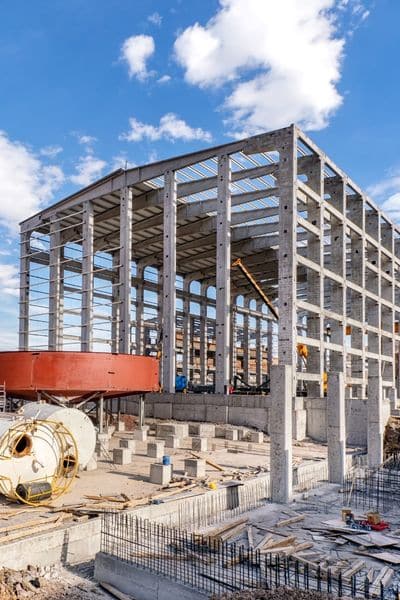
THE RESULT
Improved reliability of feasibility studies, more robust technical inputs for investment decisions, and a reduced gap between projected and actual plant performance particularly for complex orebodies where the consequences of optimistic assumptions are greatest.

RECOVERY OPTIMISATION & ESG
Optimization of recovery and ESG performance
Process simulation provides clear view of how a plant behaves as a whole, helping you improve metallurgical performance and environmental impact at the same time. What increases recovery often reduces waste as well, but it’s not always obvious when you look at the plant piece by piece. Modelling makes these trade-offs visible and manageable.
CASPEO helps operations improve recovery while reducing resource consumption by evaluating:
- Water circuit modelling and reuse strategies
- Reagent usage and environmental emissions
- Energy efficiency opportunities in grinding and separation
- Tailings behaviour and deposition characteristics
- Circular-economy opportunities such as reprocessing or recycling
Every sustainability metric is grounded in the same calibrated process model used to assess metallurgical performance. This consistency allows you to evaluate trade‑offs clearly, set realistic targets, and demonstrate progress through a transparent, model‑supported technical basis that meets the expectations of internal governance as well as external reporting frameworks such as GRI (Global Reporting Initiative), ICMM Water Stewardship, EU Critical Raw Materials Act, GISTM (Global Industry Standard on Tailings Management), and investor ESG due‑diligence processes.
THE RESULT
Improved recovery and operational stability lead to measurable reductions in environmental impact. The result is a credible, model‑backed foundation for ESG reporting and sustainability commitments.
Key benefits of simulation-driven process engineering

Improve mineral processing plant performance
Identify bottlenecks, optimise operating conditions, and reduce variability across the circuit
Reduce technical and investment risk
Validate beneficiation designs, equipment sizing and assumptions before capital is committed, not after
Strengthen sustainability performance
Model water circuits, energy consumption, and residue behaviour to support credible ESG targets
Adapt confidently to change and safeguard production
Anticipate the impact of ore variability, equipment changes, or flowsheet modifications on circuit performance
Support engineering governance
Calibrated models provide clear performance indicators for engineering teams, managers, and investors
Build the foundation for smart mining (IA, ML...)
Enable reliable application of advanced analytics and process control with steady-state simulation models
Why choose CASPEO for process modelling & simulation?
Independent of equipment suppliers
Simulation studies are driven by process fundamentals and your project objectives, not by a preferred technology outcome or equipment selection.
Powered by USIM PAC
Our simulation studies are built on USIM PAC, our process modelling software, developed and continuously improved over decades of mining application.
Experience across commodities & process routes
We build calibrated process models across all major commodities and circuits delivering fast, decision‑ready insight from scoping to optimisation.
Multidisciplinary simulation expertise
We combine mineral processing simulation, hydrometallurgical modelling, sampling, statistical data analysis, and mass balance reconciliation in a single team.
Calibrated models build on reliable data
Our simulation models are calibrated with proper statistical rigour, and interpreted by engineers who understand the full beneficiation circuit.
In-house simulation capability for your team
We train your team to use your own simulation models and update them as ore zones change, new ore types enter the feed blend, or the flowsheet evolves.
A fully integrated approach beyond traditional process simulation
CASPEO offers a unique approach to process modelling by combining expert consulting, USIM PAC simulation software, and specialist training into a seamlessly connected capability. Instead of treating simulation as a standalone exercise, CASPEO embeds it within a rigorous engineering workflow that links sampling, data reconciliation, mass balancing and process simulation.
You benefit from mineral processing simulation models that are technically rigorous and grounded in reconciled plant measurements, calibrated against a verified understanding of ore mineralogy and beneficiation behaviour, and aligned with your operational reality. This integrated approach delivers faster model build times, stronger calibration, and greater confidence in predictions whether you are developing a greenfield feasibility study, optimising a brownfield operation, or managing an ore transition that requires rethinking the existing circuit.

Consulting

USIM PAC software

Courses
Frequently Asked Questions (FAQs) on metallurgical accounting consulting services
What is metallurgical process simulation and when is it needed?
Metallurgical process simulation use of mathematical models that replicate the behaviour of a mineral processing or hydrometallurgical beneficiation circuit.
These models describe how materials flow through unit operations – crushers, grinding mills, classifiers, flotation cells, leach reactors, thickeners – and how each operation transforms feed characteristics into products, residues, and tailings.
Model parameters are calibrated against measured plant or testwork data so that the simulation reflects real process behaviour, not theoretical ideal performance.
Simulation is needed whenever decisions carry technical or financial risk that cannot be resolved by operating data or testwork alone. Typical situations include feasibility studies and engineering design projects, flowsheet comparison and validation, equipment sizing for comminution and separation circuits, scenario analysis for ore zone transitions or changing feed blends, and recovery optimisation where circuit interactions prevent identification of the best operating strategy from plant trials alone.
How is process simulation different from a simple mass balance?
A mass balance is a static accounting exercise: it checks that inputs equal outputs across a defined system boundary at a given operating point, producing a reconciled performance picture for a specific set of conditions.
Process simulation goes further. It incorporates the physical and chemical behaviour of each unit operation and predicts how the circuit will respond to changes in feed characteristics, grind size, ore mineralogy, operating conditions, or equipment configuration. It answers ‘what will happen if…?’ across conditions not yet tested.
At CASPEO, simulation and mass balance are complementary and sequential: BILCO data reconciliation provides the verified, internally consistent plant data that calibrates and validates simulation models built in USIM PAC. A simulation model built without a reconciled mass balance as its foundation is built on unverified assumptions.
What is the relationship between sampling, mass balance reconciliation, and process simulation?
These three disciplines form a single, integrated framework in which the quality of each depends directly on the quality of the one before it.
Sampling determines whether survey data genuinely represents circuit conditions across the full range of ore types and operating states.
Mass balance reconciliation transforms measured data into a coherent, uncertainty-quantified performance picture, correcting for measurement noise and ensuring internal consistency.
Process simulation uses calibrated models – validated against reconciled survey data – to predict how the circuit will respond to changes not yet made, including ore zone transitions, grind size modifications, reagent strategy changes, and flowsheet reconfigurations.
Investing in simulation without first ensuring sampling quality and reconciliation rigour is a risk. CASPEO’s integrated capability spanning all three disciplines within a single team. Our simulation studies are grounded in data that has been independently verified before a single model parameter is fitted.
What data is needed to build a reliable simulation model?
At a minimum, a reliable beneficiation circuit model requires: feed characterisation data including particle size distribution, mineralogy, liberation analysis, head grade, and ore hardness; a complete process flowsheet with unit operation parameters; equipment specifications; and measured performance data from plant surveys, pilot plant tests, or laboratory testwork.
For operating plants, representative plant survey data reconciled against a steady-state mass balance is the most critical input. For greenfield projects, simulation models are built progressively as testwork data improves, with ore characterisation (mineralogy, grindability, flotation kinetics, leach behaviour…) providing the foundation at each study stage.
Can simulation be used at the feasibility stage, before a plant exists?
Yes, and this is one of its most valuable applications. At the feasibility stage, simulation models are built from laboratory and pilot testwork data combined with engineering assumptions about equipment selection and operating conditions.
They allow project teams to forecast metallurgical recovery and product grade across different ore types and ore zones, size comminution and separation equipment against design requirements, compare alternative flowsheet configurations on a consistent quantitative basis, and stress-test financial models with sensitivity analyses grounded in process behaviour rather than point estimates.
CASPEO works closely with project teams to assess testwork data quality and identify gaps in ore characterisation that could compromise the reliability of performance forecasts.
What is USIM PAC and how does CASPEO use it?
USIM PAC is CASPEO’s purpose-built process modelling and simulation software for mineral processing and hydrometallurgical beneficiation operations. Developed and continuously improved over more than 30 years, it covers the full range of unit operations across the mine-to-metal value chain – from comminution and classification through flotation, leaching, solvent extraction, and solid-liquid separation. USIM PAC is recognised in peer-reviewed mineral processing research as a reference simulation platform for beneficiation circuit modelling.
CASPEO’s consulting team uses USIM PAC as the technical engine for all simulation studies. USIM PAC is also available as a standalone software licence for in-house engineering teams seeking to build and maintain their own simulation capability.
▶️ This article could interest you
González M., Brochot S. (2018) – Development of a SAG mill model based on the SAG design test: application to plant design and optimization. Proceedings of IMPC 2018, the XXIX International Mineral Processing Congress Proceedings, Moscow, Russie, Paper ID 587, pp. 1-9.
https://onemine.org/documents/development-of-a-sag-mill-model-based-on-the-sagdesign-test-application-to-plant-design-and-optimization
Can CASPEO simulate hydrometallurgical processes, not just mineral processing?
Yes. CASPEO’s simulation expertise covers hydrometallurgical process routes in full, including heap and tank leaching kinetics, solvent extraction and electrowinning, ion exchange and precipitation, impurity rejection, and solution purification.
For polymetallic deposits, complex or refractory ores, and secondary materials, where process routes combine physical beneficiation with chemical treatment, CASPEO models the full integrated flowsheet within a single simulation environment, capturing inter-stage interactions that would be missed if physical separation and hydrometallurgical stages were modelled independently.
When should an operation commission a simulation study rather than rely on plant data alone?
Plant data describes what has happened under past conditions and a specific ore type. It cannot predict how the circuit will behave under different ore zones, after equipment changes, or at different throughputs.
A simulation study is necessary when:
- ore zone transitions are approaching and their impact on grind size requirements, mineral liberation, recovery, and concentrate quality needs quantifying before they reach the plant
- a capital decision is approaching; reconciliation gaps persist despite good data quality
- optimisation through plant trials has plateaued
- a feasibility study requires performance forecasts across a range of ore types that testwork data alone cannot cover
How does CASPEO ensure simulation models remain useful after the study is completed?
Every model is accompanied by a technical report documenting model structure, calibration data, ore characterisation assumptions, and the limits of applicability including the ore types and operating conditions for which predictions are reliable.
CASPEO works alongside client engineering teams throughout so that the people who will use and maintain the model understand how it was built and where its boundaries lie. For teams wishing to develop in-house simulation capability, USIM PAC training covers model building, calibration, and scenario analysis, allowing clients to update models independently as ore zones change or the flowsheet evolves.
How does process simulation support ESG and sustainability objectives?
Simulation connects sustainability metrics directly to operating decisions making it possible to evaluate trade-offs, set realistic targets, and demonstrate progress with a transparent technical basis.
CASPEO uses simulation to model water circuits and reuse strategies, comminution energy consumption as the dominant operating energy cost, reagent usage and environmental releases across variable ore types, tailings behaviour and deposition characteristics for closure planning, and circular economy opportunities including secondary material reprocessing. Every sustainability figure is grounded in the same calibrated beneficiation model used for metallurgical performance.
CASPEO live
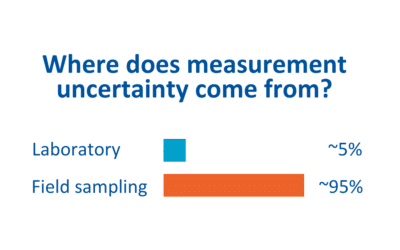
Where do sampling errors come from in mineral processing? Sampling errors field vs laboratory uncertainty
In mineral processing operations, the largest source of measurement uncertainty is field sampling, not the laboratory. CASPEO's audits of mining operations across 70 countries show a consistent...

INVENTEO metal accounting software update: discover the 2025 new features
CASPEO is proud to unveil major new features for its INVENTEO metal accounting software. Discover the 2025 version.Implement a compliant metal accounting system aligned with your operational...
Society for Mining, Metallurgy & Exploration: short course on metal accounting in 2023
CASPEO will be part of a panel of mining industry experts presenting a short course on metal accounting at the annual meeting of the the Society for Mining, Metallurgy & Exploration (SME) Nevada...
Subscribe to our newsletter
Ready to improve your process performance with CASPEO’s process simulation consulting?
Contact us to discuss your modelling and simulation challenges and explore solutions appropriate for your operation.

CASPEO provides process simulation software, metallurgical accounting solutions, and expert consulting for the mining and metallurgy industries worldwide. Through our integrated approach that combines statistical data analysis, advanced process modeling, and mass balance reconciliation, we help you build the data-quality backbone to improve efficiency, strength sustainability, consolidate governance, and succeed in your digital transformation. With CASPEO, go beyond process simulation.
Stay tuned!
Empower your decisions
Consulting
Engineering software
Get a quote
Develop your skills
Courses
Blog
Get a live demo
Need assistance?
Online support
Contact us
Site map
2026 © CASPEO - All rights reserved