
Metallurgical process flowsheet development & optimisation consulting services
Every mineral processing plant is built around a flowsheet. It defines which unit operations are selected, how they are sequenced, and under which conditions they operate.
When a flowsheet is grounded in sound process fundamentals, it delivers stable, predictable, and efficient performance. Unsurprisingly, when plants underperform, the root cause often lies in the original flowsheet or in structural bottlenecks that operational tweaks alone can never resolve. This is where independent, rigorous expertise becomes essential.
CASPEO delivers independent metallurgical flowsheet development and optimisation consulting services from greenfield flowsheet design to brownfield debottlenecking and plant performance improvement. We help you design robust flowsheets, improve existing ones, and unlock the full value of their ore bodies and processing assets.
Why process flowsheet development matters in mining industries
A metallurgical flowsheet is not just a process diagram. It is the technical and economic foundation of the entire operation. It determines how efficiently value can be extracted from an orebody. Flowsheet decisions made at the design stage determine capital allocation, equipment selection, operating cost structure, environmental performance, and a plant’s ability to cope with ore variability. Once the plant is built, the flowsheet becomes extremely difficult and costly to modify.
In operating concentrators and hydrometallurgical facilities, weaknesses in the original flowsheet often emerge as performance gaps that resist conventional troubleshooting. As deposits mature and ore types become more complex, these challenges intensify exposing design choices that no amount of operational tuning can compensate for.
Common challenges linked to flowsheet limitations include:
- Recovery losses without a clear root cause
- Plants consistently underperforming against design expectations
- High operating costs (reagents, energy, water) that cannot be reduced
- Uncertainty when selecting a process route
These challenges highlight why mineral process flowsheet design quality is so important. A high‑quality flowsheet addresses these challenges from the start. It provides clarity in complexity, ensures that each unit operation works in harmony with the others, and predicts how the plant will behave across the full range of expected ore types. A robust flowsheet not only maximises recovery and minimises costs. It reduces risk, improves ESG performance, and forms the backbone of long‑term operational stability.
CASPEO addresses these issues through structured, independent technical assessments. By integrating process mineralogy, engineering analysis, plant surveys, and advanced process modelling, we deliver recommendations to help you understand the true constraints of your flowsheet and the most impactful paths to improvement. In short, great projects begin with great flowsheets.
CASPEO’s process flowsheet design and optimisation consulting services
CASPEO provides expert advisory services spanning the complete flowsheet lifecycle from initial mineral processing flowsheet design through systematic concentrator plant optimisation. Our work is targeted at metallurgical engineers and mineral processing engineers who need technically rigorous, independently validated answers to design and performance questions.
Our approach is grounded in process fundamentals, representative data, and decades of hands-on experience across mineral processing and hydrometallurgical operations.
Explore our expertises:

Flowsheet design & revision
Development or optimization of process flowsheets
Designing a mineral processing flowsheet requires understanding how unit operations interact across the full circuit, how the flowsheet will perform across the range of ore types it will encounter, and whether the configuration is genuinely optimal for the deposit and project context.
CASPEO develops and revises process flowsheets for both greenfield projects and operating plants, applying independent engineering judgement.
Our mineral processing flowsheet development work covers:
- Comparison of process routes and flowsheet configurations
- Selection and sequencing of unit operations
- Flowsheet design of beneficiation circuits
- Revision of existing flowsheets
- Assessment of flowsheet modifications
- Integration of water, energy, and tailings objectives into PFD’s
CASPEO uses USIM PAC, its proprietary process simulation software, to support flowsheet design and revision. USIM PAC models the entire processing chain, from crushing to refining, in a single tool, enabling full‑circuit evaluation under variable ore conditions. This system‑level simulation lets us compare process routes, test design options, and validate flowsheet changes with confidence.
THE RESULT
A validated plant-wide flowsheet that reflects the behaviour of your plant and that remains robust across all expected ore types and operating conditions. The result is a dependable engineering foundation for capital decisions, detailed design, and long-term plant performance.
Process audit
Process audits to identify bottlenecks, losses, and inefficiencies
When a mineral processing plant underperforms, the cause is rarely obvious from production data alone. Recovery losses may originate upstream of where they are measured. Bottlenecks shift with changing ore characteristics. Inefficiencies are masked by compensating adjustments elsewhere in the circuit. Diagnosing these problems correctly requires a structured, systematic approach.
CASPEO conducts rigorous mineral processing plant audits that move from data collection through root-cause analysis to a prioritised improvement roadmap.
CASPEO’s process audit methodology follows five structured steps:
- Data review: baseline performance from production, survey, and control data
- Mineralogy review: liberation, associations, penalty elements
- Plant survey: representative sampling using Pierre Gy’s Theory of Sampling
- Mass balance & diagnosis: recoveries, losses, energy/reagent benchmarks
- Root‑cause & roadmap: prioritised operational, engineering, and flowsheet actions
Our studies evaluate materials and water balances, reaction kinetics, and interactions between unit operations.
With USIM PAC, CASPEO’s proprietary process modelling and simulation software, we can reconstruct and analyse the entire circuit under real operating conditions providing a full‑flowsheet diagnosis rather than isolated equipment assessments.

THE RESULT
A clear understanding of where performance losses are occurring and why and what actions will deliver the greatest improvement, ranked by impact and implementation complexity
Flowsheet performance starts with reliable data
The most rigorous flowsheet assessment or process audit is only as reliable as the data it is built on. Biased survey samples misidentify loss mechanisms. Unreconciled measurements produce a mass balance that closes on paper but misrepresents circuit reality. Incomplete mineralogical characterisation underestimates the ore zone variability the circuit must handle.
CASPEO integrates three disciplines into every flowsheeting project: sampling, mass balance reconciliation, and simulation ensuring the foundation is solid before any model is built. We are one of the very few consulting organisations delivering all three from a single integrated team.
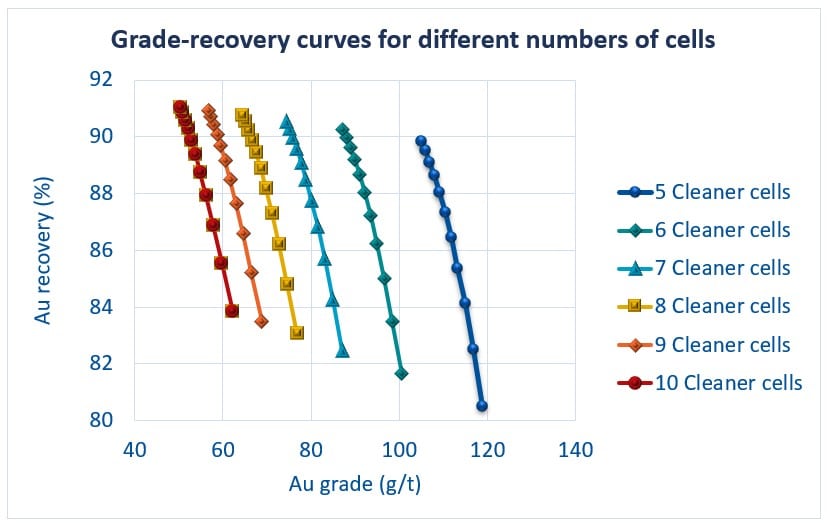
Ore variability impact analysis
Evaluating the effects of ore variability on process performance
Ore is never uniform. Mineralogy, hardness, liberation, and head grade vary across every deposit, and plants must perform reliably across this full range. Flowsheets designed or tuned for a single ore type often struggle when feed characteristics shift leading to recovery losses, concentrate quality issues, and unstable operating conditions that are difficult and costly to manage reactively.
CASPEO helps you understand and manage ore variability through structured technical assessment, for both new projects and operating plants.
Our ore variability studies include:
- Ore‑type variability characterisation
- Mineralogy, comminution, liberation assessment
- High‑risk ore type identification
- Ore‑specific operating strategy development
- Performance envelope quantification
- Flowsheet robustness improvement recommendations
All evaluations are performed using USIM PAC, CASPEO’s proprietary process modelling and simulation software, which allows detailed circuit assessment across the full range of ore conditions.
THE RESULT
A quantified view of circuit behaviour across all ore types, supporting proactive operations, reliable forecasts, and resilient mineral and metallurgical processing flowsheet development
Consumption optimisation
Reagent, energy, and water consumption optimisation
Reagents, energy, and water represent some of the largest controllable cost and environmental impact drivers in mineral processing operations. Yet many plants manage these inputs reactively, adjusting dosages and flows in response to problems rather than optimising them systematically within the context of the overall process flowsheet.
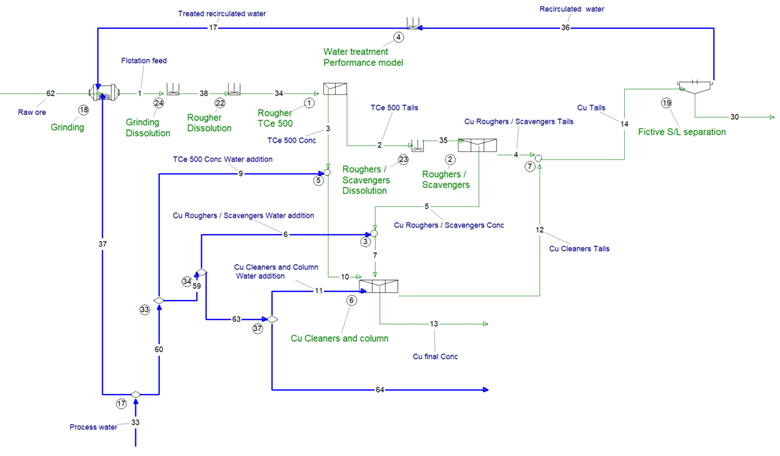
CASPEO applies a process model approach to optimise consumption at the flowsheet level. By quantifying how reagent use, energy demand, and water balance interact with metallurgical performance, we identify reductions that do not compromise recovery or product quality and ensure that improvements are robust and sustainable rather than short‑lived.
Our optimisation work covers:
- Flotation reagent optimisation
- Lixiviant use and leach kinetics optimisation
- Comminution energy optimisation
- Whole‑plant water balance modelling (inputs, losses, recirculation)
- Reagent–energy–water interaction analysis
THE RESULT
Quantified, technically validated opportunities to reduce reagent, energy, and water consumption without sacrificing metallurgical performance. A clear implementation path and a defensible technical basis for ESG reporting and regulatory compliance.
Key benefits of expert flowsheet development and process optimisation

Resolve persistent underperformance
Identify and address the structural and operational causes of underperformance against design
Make better flowsheet decisions
Evaluate process routes and circuit modifications on a technical basis before committing capital
Manage ore variability proactively
Understand how your circuit responds to feed changes and develop operating strategies before production disruption
Reduce operating costs durably
Achieve reagent, energy, and water savings grounded in process fundamentals and sustained over time
Strengthen ESG performance and compliance
Reduce resource consumption and environmental impact with a quantified technical foundation
Recover lost metallurgical value
Identify where metal is being lost acrross the flow sheet and why, with root-cause precision
Why choose CASPEO for flowsheet development and process optimisation?
Independent of equipment suppliers
Flowsheet recommendations are driven by process fundamentals and your operational objectives not by commercial relationships.
Integrated process analysis capability
We combine flowsheet engineering, process modeling and simulation, mass balance reconciliation and sampling expertise within a single team.
Expertise in complex and variable ore types
We have deep experience with challenging mineralogies: polymetallic ores, refractory ores, and deposits with high hardness or strong mineralogical variability.
Powered by USIM PAC flowsheet software
Our flowsheet design and optimisation work is supported by USIM PAC, our process modelling software, refined over decades of application in mineral processing.
More than consulting, a fully integrated approach to process performance
CASPEO’s flowsheet development and optimisation consulting is part of a broader integrated capability that spans the full data and engineering chain in mineral processing: from representative sampling with ECHANT software, mass balance reconciliation with BILCO through to process simulation with USIM PAC and metallurgical accounting with INVENTEO.
This means that flowsheet recommendations can be validated against calibrated process models, supported by independently reconciled plant data, and aligned with metallurgical accounting requirements giving you a technically coherent, fully traceable basis for every decision.

Consulting

USIM PAC software

Courses
Frequently Asked Questions (FAQs) on metallurgical process flowsheet development
What is mineral processing flowsheet development?
Mineral processing flowsheet development is the engineering process of designing, evaluating, and selecting the sequence of unit operations used to extract and concentrate value from ore from primary crushing through comminution, classification, and separation to final product.
Flowsheet design determines resource utilisation, operating costs, and environmental footprint. It directly affects recovery, product quality, energy consumption, water balance, and long‑term plant stability. A robust flowsheet reduces risk early in a project and creates a more efficient and sustainable operation.
Effective flowsheet development requires iterative evaluation of competing process routes using ore characterisation data, process mineralogy, and project constraints. Steady-state mass and energy balance modelling provides the quantitative framework for these comparisons. For complex or polymetallic ores, it must account for selectivity requirements and inter-mineral interactions across multiple separation stages. Flowsheet decisions made early are among the highest-leverage and most expensive to reverse technical choices in any project.
What is the difference between process optimisation and flowsheet development?
Process optimisation addresses how an existing flowsheet is operated improving recovery, reducing costs, and stabilising performance within the current circuit configuration.
Flowsheet development addresses what the circuit looks like designing, evaluating, or revising the sequence and configuration of unit operations.
For complex ores and polymetallic circuits, what appears to be an operational problem often has a flowsheet-level cause particularly when ore zone transitions expose the limits of a circuit designed for different mineralogy or liberation conditions. CASPEO’s audit methodology locates this boundary with evidence, not assumption.
How does ore variability affect mineral processing plant performance?
Ore variability affects mineral processing performance through several simultaneous mechanisms:
- Changes in mineralogy alter flotation selectivity and reagent requirements
- Changes in hardness and liberation characteristics affect comminution energy consumption and the particle size
- Changes in head grade and gangue mineralogy affect recovery, concentrate quality, and impurity levels in leach solutions
Most mineral processing plants are designed and optimised for a representative average ore type. When feed deviates from this average, performance deteriorates, sometimes sharply and without an obvious operational explanation.
Managing ore variability requires characterising the full range of feed types the plant will encounter, modelling how each affects circuit performance, and developing operating strategies or flowsheet modifications that maintain acceptable results across that range.
CASPEO addresses all three components in a single, integrated assessment thanks to our proprietary process flowsheet software, USIM PAC.
How should a flowsheet be adapted when a new ore type enters the plant?
When a new ore type (different ore zone, new mine feed blend, or a change in mineralogy) enters the plant, the first step is characterisation.
The new ore’s liberation characteristics, mineral associations, hardness, surface chemistry, and penalty element distribution need to be understood before operating parameters are changed, because the optimal response depends entirely on what is different about the ore and which unit operations are most affected.
CASPEO’s approach combines process mineralogy review of the new ore type with steady-state mass balance modelling across the current circuit configuration. We quantify how performance will change and identifying which parameters (grind size, reagent dosages, flotation circuit residence time, leach conditions) need to be adjusted and in which direction. Where the new ore type reveals a structural mismatch with the current flowsheet a more significant circuit revision may be required.
When should a mineral processing flowsheet be revised rather than optimised operationally?
Optimisation adjusts how the plant operates. Revision adjusts what the plant is. When performance gaps persist despite sustained optimisation, the flowsheet configuration itself is often the limiting factor.
Flowsheet revision is typically warranted when:
- The plant consistently fails recovery or grade targets across operating conditions
- Ore zone transitions have brought a different mineralogical domain into the feed that the current flowsheet was not designed for
- A new ore domain with different hardness, liberation, or penalty element profile enters the blend
- Capacity expansion requires structural circuit changes
- Process mineralogy confirms the current separation approach is mismatched to the ore being processed
CASPEO’s audit methodology locates this boundary clearly, so capital is directed to structural changes only when operational improvements have been genuinely explored.
What is USIM PAC and how is it used in flowsheet development?
USIM PAC is a specialised process modelling and simulation software used to build, evaluate, and optimise mineral processing and hydrometallurgical flowsheets.
It enables engineers to:
- simulate complete circuits in steady state
- compare alternative flowsheet configurations
- quantify recoveries, mass flows, and energy use
- evaluate ore variability scenarios
- identify bottlenecks and improvement opportunities
USIM PAC integrates all unit operations from crushing to refining within a single modelling environment, making it a reliable tool for flowsheet development, design review, process auditing, and optimisation across the full circuit.
CASPEO’s consulting team uses USIM PAC as the technical engine for all flowsheet design and optimization studies. USIM PAC is also available as subscription-based software license for in-house engineering teams seeking to build and maintain their own simulation capability.
How can a flowsheet be optimised to reduce environmental footprint?
Environmental improvement is most effective when treated as a process engineering challenge:
- Optimising grind size reduces comminution energy: the largest energy consumer in most concentrators
- Reagent optimisation reduces chemical consumption and water quality impacts
- Closing the water circuit reduces freshwater intake and tailings storage pressures
- Flowsheet simplification reduces the number of transformation steps and associated emissions
Steady‑state simulation with a tool like USIM PAC enables engineers to quantify energy–water–reagent trade‑offs and identify optimisation strategies that improve both metallurgical and ESG performance.
▶️ This article could interest you
de Ville d’Avray, M-A., Durance, M-V., Braak, E., Guezennec, A-G. (2019) – A new hydrometallurgical processing route for copper recycling. Proceedings of Copper 2019, Th 59th MetSoc Conference of Metallurgists, Vancouver, Canada.
https://onemine.org/documents/design-and-optimisation-of-a-new-hydrometallurgical-processing-route-for-copper-recycling-using-process-simulation
How geometallurgy, ore variability, and process flowsheet connect?
Geometallurgy provides the framework for understanding how ore characteristics vary across a deposit, and how these variations influence metallurgical performance. It links geological data with processing behaviour to predict plant response before the ore reaches the mill.
Ore variability is the practical expression of that geometallurgical context: differences in mineralogy, hardness, liberation, grain size distribution, alteration, and chemistry that affect how the ore behaves in comminution, flotation, leaching, and downstream circuits.
The process flowsheet must be designed and continuously adapted to handle this variability. A flowsheet tuned to one ore type may fail when the feed changes. A flowsheet grounded in geometallurgical understanding is more robust, predictable, and optimised across the entire orebody.
Geometallurgy characterises ore variability. Ore variability defines the operating envelope. The process flowsheet must be designed to perform reliably across that envelope.
▶️ This article could interest you
González M., Brochot S. and Durance M.-V., “Plant Performance Forecasting Using Geometallurgical Data and Advanced Process Simulation Techniques”, Proceedings of Procemin-Geomet 2017, Santiago, Chile, October 2017.
https://www.researchgate.net/publication/320467286_Plant_Performance_Forecasting_Using_Geometallurgical_Data_and_Advanced_Process_Simulation_Techniques
CASPEO live
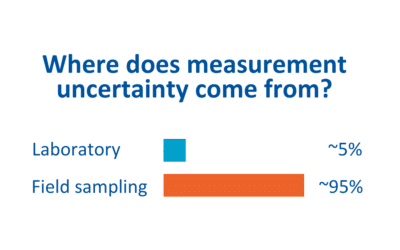
Where do sampling errors come from in mineral processing? Sampling errors field vs laboratory uncertainty
In mineral processing operations, the largest source of measurement uncertainty is field sampling, not the laboratory. CASPEO's audits of mining operations across 70 countries show a consistent...

INVENTEO metal accounting software update: discover the 2025 new features
CASPEO is proud to unveil major new features for its INVENTEO metal accounting software. Discover the 2025 version.Implement a compliant metal accounting system aligned with your operational...
Society for Mining, Metallurgy & Exploration: short course on metal accounting in 2023
CASPEO will be part of a panel of mining industry experts presenting a short course on metal accounting at the annual meeting of the the Society for Mining, Metallurgy & Exploration (SME) Nevada...
Subscribe to our newsletter
Ready to improve your process performance with CASPEO’s process simulation consulting?
Contact us to discuss your modelling and simulation challenges and explore solutions appropriate for your operation.

CASPEO provides process simulation software, metallurgical accounting solutions, and expert consulting for the mining and metallurgy industries worldwide. Through our integrated approach that combines statistical data analysis, advanced process modeling, and mass balance reconciliation, we help you build the data-quality backbone to improve efficiency, strength sustainability, consolidate governance, and succeed in your digital transformation. With CASPEO, go beyond process simulation.
Stay tuned!
Empower your decisions
Consulting
Engineering software
Get a quote
Develop your skills
Courses
Blog
Get a live demo
Need assistance?
Online support
Contact us
Site map
2026 © CASPEO - All rights reserved