
Sampling in mining: TOS-based consulting, audits & QA/QC
Accurate sampling in mining forms the foundation of reliable decision-making from exploration through production. Yet sampling errors cost operations millions through lost revenue, poor metallurgical performance, and regulatory non-compliance.
CASPEO delivers specialized consulting services in the field of mining and QA/QC consulting services that minimize sampling errors and maximize data confidence. Our expertise is grounded in Pierre Gy’s Theory of Sampling (TOS), internationally recognized sampling standards, and decades of hands-on experience across diverse mineral commodities and processing environments.
Whether designing new sampling systems, auditing existing protocols, or troubleshooting metallurgical accounting discrepancies, CASPEO provides the technical depth and practical solutions to ensure your sampling program delivers reliable, defensible results.
Why sampling errors cost mining operations millions
Sampling is the first step in the data mining value chain. If it fails, everything downstream (assays, models, process control, and metal accounting) becomes unreliable. In practice, sampling errors often exceed analytical errors by an order of magnitude, making them the dominant source of uncertainty in grade control and plant performance (Brochot, TOS forum, 2015, DOI: 10.1255/tosf.73).
Poor sampling leads to four categories of operational loss:
-
Biased grade estimates: ore and waste boundaries shift, distorting mine planning and resource models
-
Process instability: variable feed quality destabilizes circuits and reduces recovery
-
Reconciliation failures: gaps between mine, plant, and product figures erode trust and profitability
-
Compliance risk: reporting codes (NI 43-101, JORC, AMIRA P754) require auditable, representative sampling protocols
CASPEO helps you eliminate these risks through rigorous, theory-based approaches and decades of field experience in sampling ore and urban mine materials, their products and their wastes.
Ensure representative sampling from mine to port
CASPEO delivers specialized advisory services addressing the complete sampling system lifecycle, from initial design through ongoing optimization, to mining, mineral processing and metallurgical operations.
Explore CASPEO’s sampling consulting services:
- TOS-based sampling plan design
- Aid in defining QA/QC system design for sampling (NI 43-101, JORC, AMIRA P754)
- Sampling system audit and measurement accuracy http://QAQCassessment
- Uncertainty budget and sampling bias reduction
All services are independent of laboratories, equipment suppliers, and assaying providers.
TOS-based sampling plan design
Representative sampling starts with a protocol designed around your ore characteristics, mining method, and operational constraints. Independent from any laboratories or equipment suppliers, CASPEO designs sampling plans using Pierre Gy’s Theory of Sampling and international best practices.
Whatever the objective of sampling (deposit or bloc estimate, daily control, metal accounting or plant survey), the plan design process answers four questions for each sampling point:
- Why is a sample needed and for which analysis?
- Where, when and how should it be collected?
- What sample mass achieves the target precision?
- What equipment geometry and preparation protocol is required?
Outputs of a sampling plan design include:
- Optimal sampling point selection
- Sampling strategy definition
- Calculation of sample masses achieving desired level of representativeness using Pierre’s Gy formula
- Equipment geometry specifications
- Sample preparation protocols from collection through analysis
- Recommandations for operating and practice
We also train your staff in sampling principles and practice, building internal capability to maintain skill over time.

THE RESULT
An implementation report with detailed sampling protocols including equipment specifications and constraints formatted for use in invitations to tender

Aid in defining a QA/QC system for sampling (NI 43-101, JORC, AMIRA P754)
For publicly listed companies, sampling protocols must be supported by a documented Quality Assurance and Quality Control (QA/QC) system. If such a system is generally implemented for the analytical lab, CASPEO help you to extend it to sampling procedures.
CASPEO’s sampling services for QA
- Writing sampling procedures, including QC procedures
- Verifying documentation completeness and coherence
- Propose quality control frameworks including certified reference materials (CRMs), blanks, and duplicates
CASPEO’s sampling services for QC
- Auditing the sampling system
- Preparing your staff for internal audit
- Interpreting statistical results from QC data and recommending corrective actions
We also train your staff in QA/QC principles and procedures, building internal capability to maintain program effectiveness over time.
THE RESULT
Accurate and reliable sampling data that meets operational needs and satisfies international reporting standards such as NI 43-101, JORC, or AMIRA P754 Code giving you confidence in every decision
Audit and optimization of your sampling and measurement system
An accurate measurement system is the foundation for reliable resource valuation and stable mineral and hydrometallurgical processing plants.
CASPEO audits the full sampling and measurement system evaluating whether accuracy is sufficient for metal accounting, acceptable for process control, or requires enhancement.
Our team examine your production processes from mine through plant streams and product shipments.
Audit scope covers seven domains (Brochot, TOS forum, 2015, DOI: 10.1255/tosf.73):
- Equipment: samplers, preparation tools, laboratory instruments, calibration records
- Documentation: manuals, maintenance logs, calibration certificates, inventory
- Procedures: sample collection, preparation, and analysis protocols
- Data management: capture, traceability, storage, backup and access control
- QA/QC documentation: procedures, control charts, non-conformance reports
- Uncertainty budgets: quantified for each relevant measurement point
- Information and data repository: structure and access control

This audit is a standard component of any metallurgical accounting audit and implementation or revamp project.
THE RESULT
Root-cause identification of deviations and poor data quality with practical optimization recommendations. Audits frequently reveal low-cost fixes with immediate impact on data reliability.

Statistical review and bias reduction in existing sampling protocols
CASPEO builds a complete uncertainty budget for the sampling and measurement chain from in-situ material to final assay and metallurgical testwork results. We help you uncover and correct hidden biases in sampling and measurement to ensure reconciled figures you can trust.
The process (described in Brochot (TOS forum, 2015, DOI: 10.1255/tosf.73) involves three steps:
- Inventory of the full sampling and measurement chain
- Quantification of each error source using ECHANT software (based on Pierre Gy’s formula), separating sampling error from analytical variance
- Reconciliation of all data by material balance using BILCO software, producing coherent estimates that satisfy conservation laws
What you gain from our statistical review:
- A targeted uncertainty budget identifying dominant error contributors
- Reconciled datasets for robust metal accounting with confidence intervals
- Pactical actions to improve sampling design, preparation, analysis, and data management
THE RESULT
Quantify uncertainty, detect bias, and improve confidence in your testwork and production data. This service increases reconciliation accuracy and strengthens your metal accounting framework. It gives you a clearer view of your operations making it easier to diagnose issues, reduce inefficiencies, and improve grade, recoveries and product quality.
What a robust sampling strategy delivers

Stronger control over your mine’s life cycle
Sampling quality supports better decisions at every stage (exploration, grade control, processing, tailings management…)
Compliance confidence
Robust sampling practices demonstrate alignment with NI 43‑101, JORC, and AMIRA P754 requirements

Reliable foundation for process decision
Representative samples support reliable modelling, process control, metallurgical accounting, and financial reporting

Enhanced plant efficiency
Representative sampling improves plant stability, reduces losses, and increases production efficiency

Consistent product quality
Accurate sampling reduces grade variability and ensures product specifications are consistently met

Quantifiable ROI
Payback periods of only 3-4 months, with annual benefits ranging from $100,000 to more than $1 million
Why choose CASPEO for sampling consulting?
Independent and vendor-neutral
CASPEO is fully independent of laboratories, equipment suppliers, and assaying service providers, guaranteeing impartial advice and solutions tailored to your needs.
One team, the full data chain
Sampling consulting integrates with CASPEO’s data reconciliation (BILCO), metallurgical accounting (INVENTEO), and process modelling (USIM PAC) capabilities.
Scientifically grounded recommendations (TOS)
CASPEO combines deep theoretical knowledge with hands-on mineral processing experience, applying sampling principles in real-world plant conditions.
Decades of experience across ores & processes
CASPEO has designed sampling plans for precious metals, base metals, industrial minerals, and iron ore across primary and secondary (urban mine) materials.
Knowledge transfer and training
Through training and clear documentation, CASPEO empower your team to sustain improvements and maintain best practices over time.
Comprehensive sampling systems
Our consultants bring decades of experience in multi-commodity operations, including mineral processing plants, smelters, and refiners worldwide.

Stéphane Brochot: sampling authority
Stéphane Brochot is Co-Manager at CASPEO and an active member of the International Pierre Gy Sampling Association (IPGSA), where he contributes to global standard development and best-practice dissemination.
Some peer-reviewed publications on sampling:
- Brochot, S. (2015). The overall measurement error – TOS and uncertainty budget in metal accounting. TOS forum, 2015(5), 83-86. DOI: 10.1255/tosf.73
- Brochot, S. (2021). Metal accounting: a direct link between sampling and financial management. Spectroscopy Europe, vol. 33, no. 7.
- Brochot, S. & Mounié, F. (2015). Placer gold sampling – the overall measurement error using gravity concentration. TOS forum, 2015(5), 43-50. DOI: 10.1255/tosf.65
Engaging CASPEO on sampling means direct access to Stéphane Brochot’s technical knowledge and field experience across mineral commodities and processing environments.
A complete sampling ecosystem: software, training, and consulting
CASPEO provides the most integrated sampling offer on the market by combining:
- Consulting based on TOS and indsutry best practices
- ECHANT software for sampling error quantification
- Training programs (sampling calculation and QA/QC for sampling)
- Data reconciliation through BILCO software
- Metallurgical accounting expertise for P754-compliant systems.
You benefit from sampling data that is not only representative, but also consistently validated, reconciled, and fit for reporting. This end-to-end capability delivers faster implementation, reduced bias and uncertainty, stronger compliance with reporting standards, and long-term control over data quality and metal accountability.

Consulting

Software

Courses
Frequently Asked Questions (FAQs): implementing sampling in mining
What is sampling in mining?
Sampling in mining is the process of collecting representative portions of material -ore, rock, slurry or processed product- to determine grade, mineralogy, and other characteristics. It forms the foundation of every critical decision from exploration through production. Sampling data drives resource estimation, mine planning, grade control, metallurgical accounting, and process optimization.
The challenge is that we cannot measure entire ore bodies or process streams. All decisions -resource estimation, mine planning, grade control, process optimization, metallurgical accounting- rely on samples. If those samples are not representative, every decision downstream carries unquantified error.
What is the Theory of Sampling (TOS)?
The Theory of Sampling (TOS) is the scientific framework for collecting representative samples from heterogeneous materials such as ores, concentrates, slurries, and process streams. Developed by Pierre Gy, TOS classifies all sampling errors into seven categories and provides the principles needed to control or eliminate each.
A core finding: the overall measurement error (OE) equals the Total Sampling Error (TE) plus the Analytical Error (AE). In most mining operations, TE dominates AE making sampling system design the primary lever for improving data quality (Brochot, TOS forum, 2015, DOI: 10.1255/tosf.73).
TOS is embedded in AMIRA P754 code for metallurgical accounting and is the methodological basis for sampling audits required by NI 43-101 and JORC.
By applying TOS, CASPEO helps mining companies design sampling systems that deliver reliable, defensible, and decision‑ready data, from exploration to final product shipment.
▶️ This article could interest you
Brochot, S. (2015). The overall measurement error – TOS and uncertainty budget in metal accounting. TOS forum, 2015(5), 83-86. https://doi.org/10.1255/tosf.73
What are the main types of sampling errors in mineral processing?
Pierre Gy’s Theory of Sampling identifies seven types of sampling errors:
- Fundamental Sampling Error (FSE) from material heterogeneity of constitution, controlled through adequate sample mass
- Grouping and Segregation Error (GSE) when particles are not taken individually and separate by size or density during sampling
- Delimitation Error (DE) from incorrect sampling geometry where equipment doesn’t assure equiprobability
- Extraction Error (EE) when particles near the sample boundary are incorrectly included or excluded
- Integration Error (IE) from material heterogeneity of distribution when time-based composite sampling misses process variations
- Preparation Errors (PE) from contamination, losses, or alterations during sample handling
- Analytical Error (AE) from laboratory measurement uncerainty
In mineral processing, FSE, GSE, and IE typically dominate. Delimitation errors from worn or poorly designed cross-stream samplers can introduce severe, systematic bias.
▶️ This article could interest you
Brochot, S. (2015). The overall measurement error – TOS and uncertainty budget in metal accounting. TOS forum, 2015(5), 83-86. https://doi.org/10.1255/tosf.73
▶️ This article could interest you
Brochot, S. & Mounié, F. (2015). Placer gold sampling — the overall measurement error using gravity concentration on particle size ranges during sample treatment. TOS forum, 2015(5), 43-50. https://doi.org/10.1255/tosf.65
What is Fundamental Sampling Error (FSE) and why does it matter?
Fundamental sampling error (FSE) is the unavoidable, random error arising from material heterogeneity, the natural variability in how valuable minerals are distributed within ore particles. FSE typically contributes around half of total sampling variance and cannot be eliminated, only minimized through proper sample mass selection and particle size reduction.
It matters because FSE often dominates all other error sources combined, yet most operations fail to calculate and control it properly. Using Pierre Gy’s formula, the required sample mass to achieve target precision can be calculated based on ore characteristics. Understanding FSE is essential. Collecting a 2 kg sample when 10 kg are needed for acceptable precision guarantees unreliable results regardless of analytical quality.
What is the financial impact of poor sampling in mining?
The financial impact of sampling errors is systematic and quantifiable.
Published case studies document losses from hundreds of thousands to tens of millions of dollars per year from biases that were undetected without a proper audit.
- Hidden production losses
Case of a copper smelter with hidden bias in slag sampling
Manual sampling every 2 hours missed systematic matte entrainment in slags.
Bias: 0.29 percentage points Cu (0.66% detected vs 0.95% actual).
Annual loss: USD 9.54 million (350 days × 1,000 t/day × 0.29% Cu × USD 9,400/t)
Secondary effect: the imbalance accumulated as phantom copper in Work-In-Progress inventories reaching physically impossible figures and triggering accounting adjustments that impacted the company’s stock market valuation.
- Commercial disadvantage in metal trading
Case of copper concentrate trading where measurement uncertainty shifts commercial power
Delivery: 17,000 t,
Provisional Cu grade (seller): 26.000%
Smelter grade (buyer): 25.825%
Difference: 0.175 percentage points
Value at stake on one lot: approximately USD 280,000With a TOS-correct sampling system: annual benefit for the smelter up to USD 1 million per year
These cases share a common pattern: the financial loss was ongoing, undetected, and correctable. In each case, the cost of the sampling improvement was recovered within months. The loss before correction had accumulated for years.
▶️ Cases studies extracted from this article
Brochot, S. (2021). Metal accounting: a direct link between sampling and financial management. Spectroscopy Europe, vol. 33, no. 7.
How does poor sampling affect ore grade estimation?
Poor sampling introduces two types of error into grade estimaton:
- bias (systematic deviation)
- excess variance (random scatter)
Sampling bias of just 0.1% absolute grade might seem small but translates to millions in misclassified ore or incorrect resource statements for large deposits. Grade control bias sends ore to waste dumps or dilutes mill feed with barren rock, both destroying economic value.
High sampling variance widens confidence intervals on grade estimates, forcing wider drill-hole spacing or higher cut-off grades.
Reconciliation discrepancies between mine and mill grades typically trace back to sampling problems rather than actual material losses. But without a proper sampling audit, the root cause remains unidentified.
▶️ This article could interest you
Brochot, S. (2021). Metal accounting: a direct link between sampling and financial management. Spectroscopy Europe, vol. 33, no. 7.
What are the best practices for sampling in mining industries?
Best practices for sampling in the mining industries include:
- Calculating correct sample mass to control fundamental sampling error using Pierre Gy’s formula based on material heterogeneity and target precision
- Using correct sampling equipment geometry (delimitation) that extracts representative portions following the Principle of Equiprobability and Centre of Gravity
- Positioning sampling points to capture true material variability while minimizing bias
- Minimizing preparation errors through proper comminution, correct splitting, and contamination prevention protocols
- Implementing robust QA/QC monitoring with certified reference materials (standards), blank samples, and duplicates at statistically justified insertion rates
- Following Theory of Sampling principles throughout the sampling chain from collection through analysis
- Maintaining and calibrating equipment regularly to prevent drift
- Training personnel in correct sampling techniques
- Documenting all protocols to ensure consistency and regulatory compliance with NI 43-101, JORC Code, and AMIRA guidelines
What sampling standards apply to publicly listed mining companies?
Three reporting codes govern sampling requirements for publicly listed mining companies:
• NI 43-101: Canadian standard for disclosure of mineral projects; requires qualified person sign-off on sampling procedures
• JORC Code: Australian/international standard for public reporting of exploration results, mineral resources, and ore reserves
• AMIRA P754: best-practice standard for metallurgical accounting; defines 10 principles including representative sampling and uncertainty quantification
All three require that sampling protocols be designed, documented, and audited against recognized technical standards, primarily Pierre Gy’s Theory of Sampling.
What is ECHANT sampling software and how does it help with sampling plan design?
ECHANT is CASPEO’s software for sampling protocol design and sample mass calculation in mineral processing operations. It implements Pierre Gy’s TOS formulas to calculate the Fundamental Sampling Error (FSE) for a given ore and particle size, and determines the minimum sample mass required to achieve a specified precision target.
CASPEO uses ECHANT within consulting engagements to produce defensible, calculated sample mass specifications replacing rules of thumb with quantified, ore-specific protocol design. It is an everyday tool that mining engineers, geologists, and metallurgists can use confidently to design better sampling programs and maintain data quality.
▶️ Test ECHANT sampling software for free here
CASPEO live
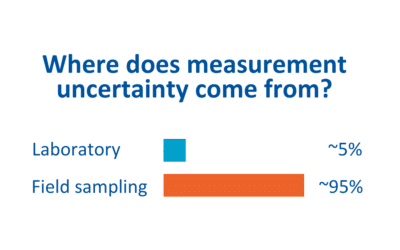
Where do sampling errors come from in mineral processing? Sampling errors field vs laboratory uncertainty
In mineral processing operations, the largest source of measurement uncertainty is field sampling, not the laboratory. CASPEO's audits of mining operations across 70 countries show a consistent...

INVENTEO metal accounting software update: discover the 2025 new features
CASPEO is proud to unveil major new features for its INVENTEO metal accounting software. Discover the 2025 version.Implement a compliant metal accounting system aligned with your operational...
Society for Mining, Metallurgy & Exploration: short course on metal accounting in 2023
CASPEO will be part of a panel of mining industry experts presenting a short course on metal accounting at the annual meeting of the the Society for Mining, Metallurgy & Exploration (SME) Nevada...
Subscribe to our newsletter
Contact a sampling specialist
Strengthen your sampling program with CASPEO’s independent consulting services, combining scientific theory, field experience, and process expertise to deliver reliable, defensible data for every operational decision.

CASPEO provides process simulation software, metallurgical accounting solutions, and expert consulting for the mining and metallurgy industries worldwide. Through our integrated approach that combines statistical data analysis, advanced process modeling, and mass balance reconciliation, we help you build the data-quality backbone to improve efficiency, strength sustainability, consolidate governance, and succeed in your digital transformation. With CASPEO, go beyond process simulation.
Stay tuned!
Empower your decisions
Consulting
Engineering software
Get a quote
Develop your skills
Courses
Blog
Get a live demo
Need assistance?
Online support
Contact us
Site map
2026 © CASPEO - All rights reserved